Belt Conveyors
Flat and troughed belt conveyors for horizontal, inclined and declined material transport. Designed for abrasive minerals, processed products and bulk materials.
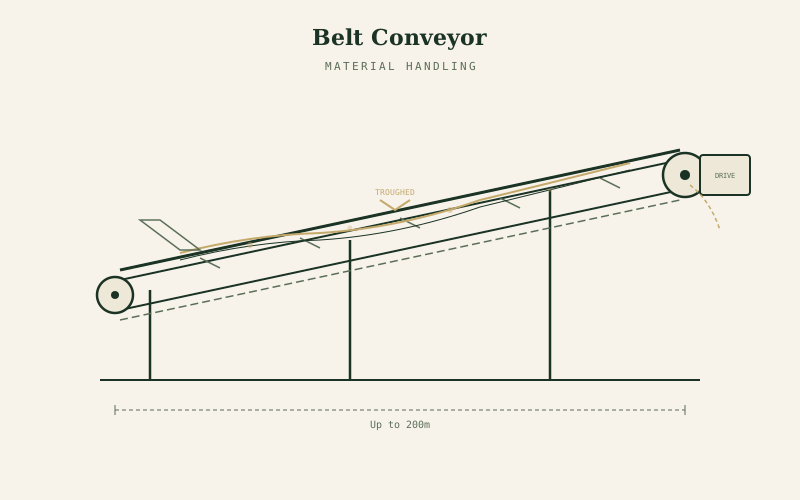
Belt Conveyors
Horizontal, inclined, and declined material transport for bulk minerals, aggregates, and processed products. Belt profile and trough angle are custom-designed from material angle of repose and lump size distribution.
Flat Belt — Regular-shaped products and medium lump sizes. Simple design, easy cleaning, lower cost. Ideal for clean manufactured products and short transfer runs.
Troughed Belt — 35°, 45°, or 50° trough angles increase capacity and allow steeper inclines by containing material within the trough edges. Essential for inclined transport and varied lump sizes.
Drive & Control
Direct-mounted gearbox drives are standard up to 200 TPH. Longer conveyors or higher capacities use multiple-drive systems that distribute load along the belt, reducing tension and extending service life.
VFD drives recommended for steep inclines (reduces startup shock), variable feed rates, and process control integration. Horsepower calculated per ISO 5048 accounting for material weight, friction, incline angle, and belt speed.
Idler & Bearing Design
Sealed, pre-greased idlers with 5,000+ hour grease life specifications. Carry-side idlers every 3–5m, return-side every 1.5–2.0m. Wing pulleys on troughed conveyors maintain proper trough geometry.
Bearing failure is the primary cause of conveyor downtime — idler specification is critical to system reliability.
Incline Design
Inclines above 10° require cleats (transverse ribs) to prevent material rollback. Above 20°: stronger drive motors, slope-load analysis for bearing and frame stress, and redundant safety stops to prevent rollback on drive failure.
Commissioning
- Foundation level/plumb verification
- Motor and gearbox alignment to ISO 23309
- Belt splicing (vulcanized or metal splice)
- Tension setting and tracking adjustment
- 40-hour no-load run-in, then graduated loading to rated capacity
- Bearing temperature monitoring over first week