Bucket Elevators
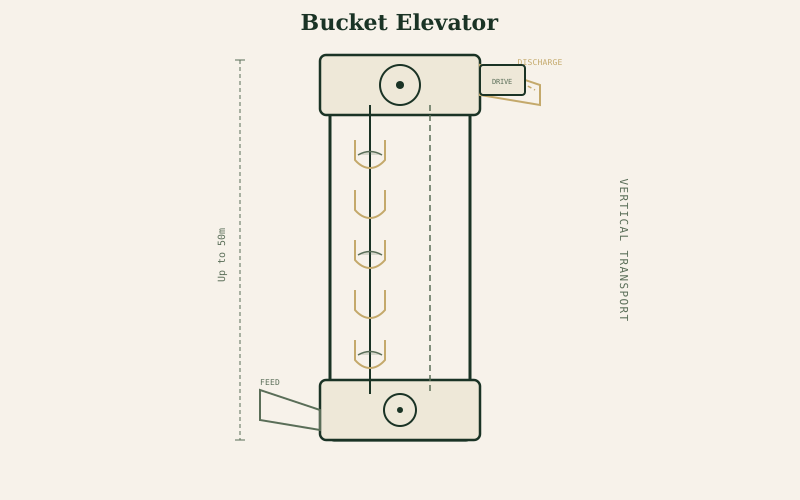
Centrifugal and continuous discharge bucket elevators for vertical material transport. Belt or chain-mounted buckets for elevating powders, granules, and lump materials up to 50m.
Bucket Elevators
Vertical material transport from ground level to process equipment, storage bins, or packaging lines. Buckets mounted on belt or chain scoop material from the boot section and discharge at the head.
Centrifugal Discharge — High-speed operation. Buckets fling material outward at the head pulley using centrifugal force. Best for free-flowing materials like grain, sand, and dry minerals where gentle handling is not critical.
Continuous Discharge — Low-speed operation. Buckets invert and material slides out under gravity over a back-plate. Required for fragile materials, lumpy products, or applications where breakage must be minimized.
Belt vs Chain Configuration
Belt-mounted buckets use rubber or PVC belts as the carrying medium. Lighter, quieter operation with lower cost — standard for moderate temperatures and non-abrasive materials.
Chain-mounted buckets use single or double-strand roller chains. Required for high-temperature service (above 150°C), heavy lump materials, and applications with abrasive dust that would degrade a belt.
Boot & Head Section Design
The boot section is where material enters and buckets scoop. Proper boot design prevents material packing, chain/belt damage, and excessive wear:
- Gravity inlet for free-flowing materials
- Controlled feed chute for metered operation
- Clean-out door for maintenance access
- Takeup mechanism for belt/chain tension adjustment
Head section houses the drive and discharge chute. Backstop device on the drive prevents reverse rotation under load — critical safety feature for all elevators.
Safety & Monitoring
- Speed monitoring with automatic shutdown on belt/chain slip
- Bearing temperature sensors on head and boot shafts
- Bucket alignment inspection via casing access doors
- Explosion venting panels for combustible dust applications
- Boot-level sensors to prevent material flooding
Commissioning
- Casing plumb verification (critical for belt tracking)
- Drive alignment and backstop function test
- Belt/chain tension adjustment
- No-load run-in followed by graduated loading
- Bearing temperature monitoring during first 48 hours