Cyclone Separators
High-efficiency single and multi-cyclone separators for primary dust removal. Reduces downstream baghouse load by 60–80% and extends filter bag life significantly.
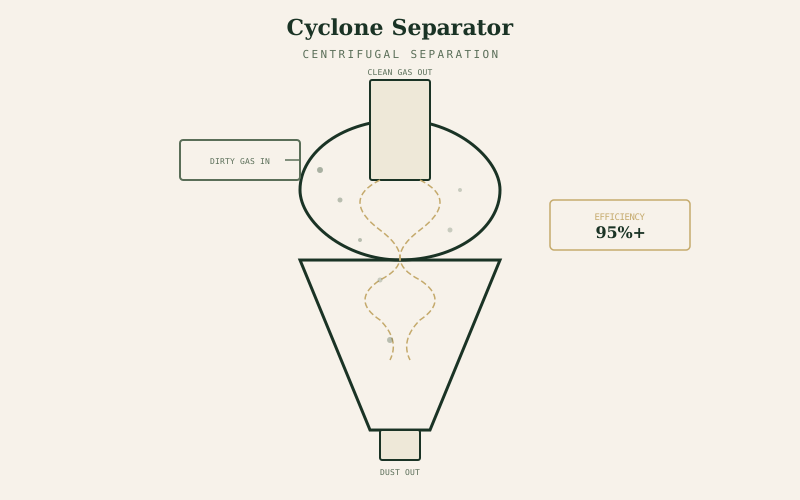
Cyclone Separators
Primary dust separation before baghouse filtration. Centrifugal force drives particles to the wall while clean gas exits through the vortex finder. No moving parts, no filter media, minimal maintenance.
Single Cyclone — Compact footprint for medium gas volumes. Simple installation with single inlet and dual discharge. Standard for individual equipment exhaust points.
Multi-Cyclone — Multiple small-diameter cyclones in parallel within a common housing. Higher efficiency than a single large cyclone at equivalent throughput — preferred for high-volume kiln and dryer exhaust systems.
Design Methodology
Cyclone geometry is calculated from target cut size, gas velocity, and particle density. Inlet velocity is sized to maintain separation efficiency without excessive pressure drop.
Key design parameters:
- Barrel diameter and length ratio for residence time
- Cone angle for controlled spiral descent
- Vortex finder diameter and insertion depth
- Dust outlet diameter to prevent re-entrainment
Wear Protection
Abrasive materials cause accelerated erosion at the cyclone cone and inlet zone. Protection options include:
- Replaceable wear plates at high-impact zones
- Ceramic tile lining for severe duty
- Increased wall thickness at cone transition
- Hardened steel (AR400/AR500) construction
Integration
Cyclones are typically installed upstream of a bag filter house in series. This combination achieves 99.9%+ overall collection efficiency while reducing bag replacement frequency by 2–3x compared to baghouse-only systems.
Collected dust discharges via rotary airlock valve to prevent gas bypass. Proper sealing at the dust outlet is critical for maintaining separation efficiency.